
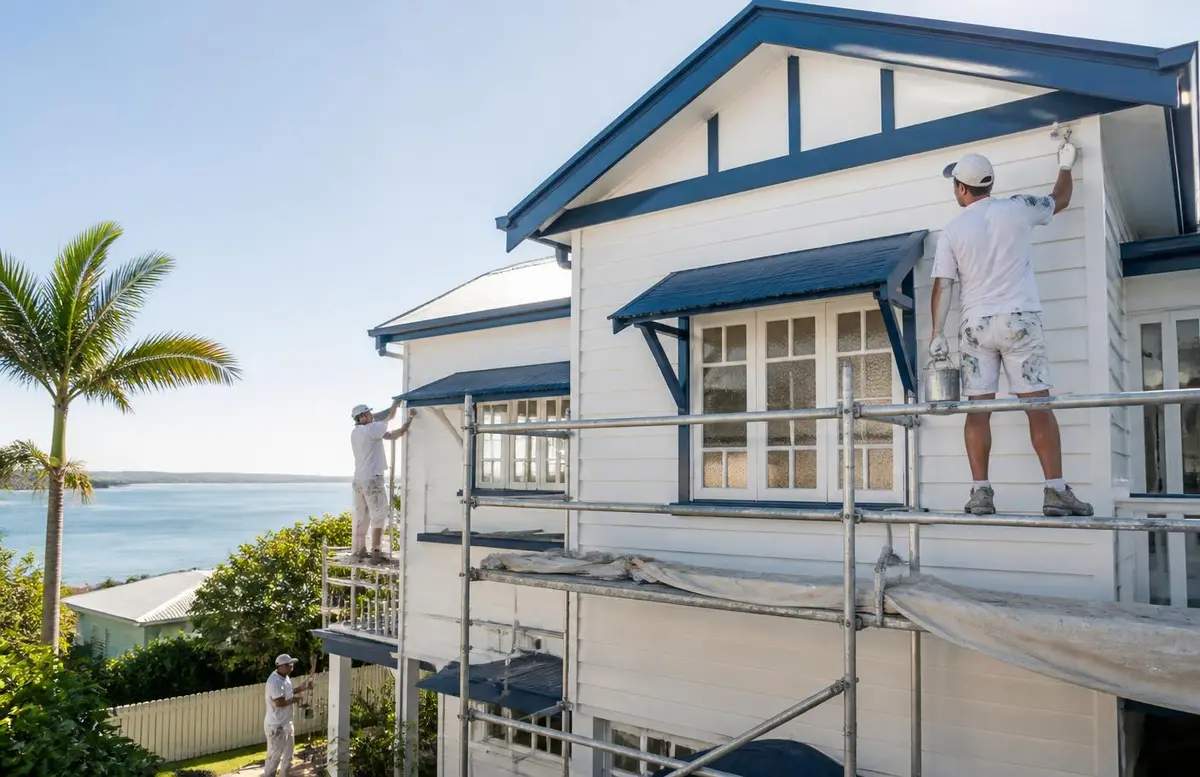
Salt-laden sea breezes and intense UV make Hervey Bay one of the harder environments in Queensland for exterior paintwork to survive untouched. A regular, structured maintenance routine is the single biggest factor in how long a paint job lasts, and it costs far less time and effort than a full repaint brought on by neglect. This checklist covers what to inspect, how often, and how to catch early failure before it spreads across Pialba, Scarness, Torquay, Urangan and beyond.
Why Coastal Maintenance Is Different
Airborne salt settles on every exterior surface, not just the walls facing the water. It builds up in fine layers, retains moisture against the substrate, and accelerates the breakdown of paint film, especially on surfaces exposed to direct sun. Add strong UV exposure most of the year and a storm season running November to March, and it is easy to see why coastal homes need a more disciplined maintenance schedule than inland properties.
A Seasonal Inspection Routine
Every Three Months
A quick visual walk-around every three months is enough to catch most early problems. Look at south and west-facing walls where sun exposure is heaviest, check eaves and fascia for staining, and glance over window frames and door frames for any lifting paint or exposed timber.
Before and After Storm Season
A more thorough inspection makes sense in October, before the wet season builds, and again in April once storms have passed. Before storm season, check that gutters, downpipes and flashing are sound so wind-driven rain does not sit against painted surfaces. After storm season, check for any new cracking, peeling or water staining caused by heavy rain and wind-blown salt spray.
- Quarterly: quick visual check of high-exposure walls, eaves and window frames
- Pre-storm season (October): check gutters, flashing, sealant joints and roof penetrations
- Post-storm season (April): check for new peeling, cracking, staining or timber swelling
- Annually: full wash-down and detailed inspection of every elevation, deck, fence and outbuilding
Washing Schedules to Remove Salt
Regular washing is the most effective and lowest-cost maintenance task available to homeowners. Salt residue left to accumulate holds moisture against the paint film and accelerates chalking and fading.
- Homes within a few streets of the water: rinse exterior walls every one to two months
- Homes further inland such as Nikenbah or Eli Waters: a wash every three to four months is usually sufficient
- Always rinse from the top down using a garden hose or low-pressure setting
- Pay particular attention to areas under eaves where salt and dust accumulate without natural rain-washing
- Wash window frames, tracks and flyscreens where salt crystals can cause pitting over time
High-pressure washing can force water behind weatherboards, strip sound paint film, and drive moisture into timber joints. Use a standard garden hose or a pressure washer on its lowest setting held well back from the surface, and never aim directly into gaps, vents or eaves.
Checking Eaves, Fascia and Window Frames
Eaves and fascia boards cop constant indirect UV and salt exposure and are often the first place paint fails, particularly where timber has been used. Run a hand along fascia boards to feel for soft or spongy timber, and look closely at joints and end grain where water can penetrate. Window frames should be checked for cracking around putty lines and corners, since failed seals here let moisture into the frame itself.
Decks, Fences and Outdoor Timber
Horizontal timber surfaces like decks take the most punishment from standing water, UV and foot traffic. Check for greying, splintering or lifting coating, and re-coat decks on a shorter cycle than vertical wall surfaces. Timber and Colorbond fences should be checked for rust streaking at fixing points and for coating breakdown along the top edge, which receives the most direct sun.
Roof and Gutter Checks
While roofing is a specialised trade in its own right, a visual check from ground level or via a stable ladder can reveal early paint or coating failure on metal roofing, particularly around ridge capping and near fixing screws where rust bleed often starts. Clear gutters regularly so overflow does not run down and stain freshly painted fascia and walls below.
Spotting Early Signs of Paint Failure
Catching failure early means the fix is a touch-up rather than a full repaint. Learn to recognise the progression of coating breakdown so you can act at the earliest stage.
- Chalking: a fine powdery residue on your hand after wiping the wall, an early sign of UV breakdown
- Fading: colour looking noticeably lighter on sun-facing walls compared with shaded elevations
- Hairline cracking: fine cracks in the paint film, often the first visible sign of flexibility loss
- Blistering: small bubbles in the paint film, usually indicating trapped moisture
- Peeling: paint lifting away from the substrate, a sign prep or adhesion has failed
- Rust staining: brown streaking from fixings, flashing or hardware bleeding through paint
Safe Cleaning Methods
Stick to mild detergent solutions and soft-bristle brushes for general cleaning, rinsing thoroughly afterwards. Avoid strong bleach solutions on painted timber, and never mix cleaning chemicals. For mould or mildew in shaded, damp areas, a diluted mould-specific outdoor cleaner followed by a thorough fresh water rinse is more effective and less damaging than scrubbing with abrasive pads, which can burnish or scratch the paint film.
When Touch-Ups Work — and When They Don’t
Touch-ups are effective when failure is isolated, the surrounding paint is still sound, and the touch-up is done with matching product and proper feathering of the edges. They are not a long-term fix once chalking, fading or cracking is widespread across an elevation, because the colour and sheen mismatch becomes visible and the underlying coating is nearing the end of its service life across the whole surface, not just the patched area.
Note the date of your last full wash-down, any touch-ups completed, and photos of problem areas each season. This makes it much easier to explain the history of the paintwork to a painter when the time comes for a full repaint.
Tools and Products Worth Keeping On Hand
A basic maintenance kit saves time and helps you deal with small issues before they spread. A soft-bristle exterior brush, a garden hose with an adjustable low-pressure nozzle, a mild outdoor detergent, a diluted mould and mildew treatment, and a small amount of touch-up paint in your exact wall colours and sheen levels are the essentials. Keep leftover paint from your last job clearly labelled with the room or elevation, the brand, range, colour code and sheen, since matching an old colour without this information later can be difficult and sometimes impossible if a product has been reformulated or discontinued.
- Soft-bristle exterior wash brush and a bucket for detergent solution
- Garden hose with adjustable, low-pressure nozzle attachment
- Mild pH-neutral outdoor detergent suited to painted surfaces
- Diluted mould and mildew treatment for shaded, damp-prone areas
- Labelled touch-up paint with brand, range, colour code and sheen recorded
- A stable ladder rated for the heights involved, plus basic fall-prevention care
Common Maintenance Mistakes That Shorten Paint Life
Even well-intentioned homeowners can unintentionally shorten the life of their paintwork. Using a high-pressure setting to “blast off” salt and grime is one of the most common mistakes, along with leaving mould to spread untreated because it seems cosmetic rather than a sign of ongoing moisture. Mixing bleach with other cleaning products, scrubbing with abrasive pads, and ignoring small rust stains from fixings until they streak down an entire wall are all avoidable issues that a simple, regular routine prevents.
- Using high pressure water settings that strip paint or force water behind boards
- Leaving mould or mildew untreated because it looks minor
- Ignoring small rust bleed from screws, brackets or flashing until it spreads
- Letting overgrown plants sit against walls, trapping moisture against the paint film
- Painting a touch-up directly over chalky residue without cleaning first
- Skipping gutter clearing, allowing overflow to stain fascia and walls repeatedly
How Aspect and Elevation Change Your Maintenance Priorities
Not every wall of your home ages at the same rate, so a smart maintenance routine treats each elevation differently. North and west-facing walls in Hervey Bay cop the most direct sun through the afternoon and will typically show chalking and fading first, so give these elevations more frequent visual checks. South and east-facing walls are more sheltered from direct UV but can stay damp for longer after rain, making them more prone to mould and mildew, particularly where nearby trees or fences block airflow and sunlight.
Coordinating Maintenance with Gutter and Roof Care
Painted surfaces don’t exist in isolation from the rest of your home’s exterior. Blocked gutters cause overflow that streaks and stains fascia and walls, cracked sealant around roof penetrations lets water track down through eaves, and failing flashing can introduce moisture behind cladding long before any sign shows on the painted surface itself. Building a basic gutter clean and roof-penetration check into your pre-storm-season routine protects the paintwork below as much as it protects the roof itself.
If you’re unsure whether what you’re seeing is normal ageing that a maintenance coat can handle, or the start of a bigger problem, call now on +61 7 4428 2846 and we can talk you through what to look for before you decide.
Building a Maintenance Routine Into Your Year
The homes that get the longest life out of a paint job are the ones where maintenance is a routine, not an afterthought. Pair your quarterly visual checks with your annual wash-down, keep gutters clear, and deal with small issues as soon as you spot them rather than waiting until a whole wall needs attention.
Need Help Assessing Your Paintwork?
If you are unsure whether your home needs a touch-up, a maintenance coat or a full repaint, we are happy to take a look and give you honest, practical advice. Call now on +61 7 4428 2846 or email quotes@housepaintersherveybay.com.au, Monday to Friday 7am–5pm or Saturday 8am–12pm.
Questions about your own property?
Call Now — +61 7 4428 2846For a local assessment, explore our house painting service in Hervey Bay or ask about work in Dundowran.
Request an on-site painting assessment