
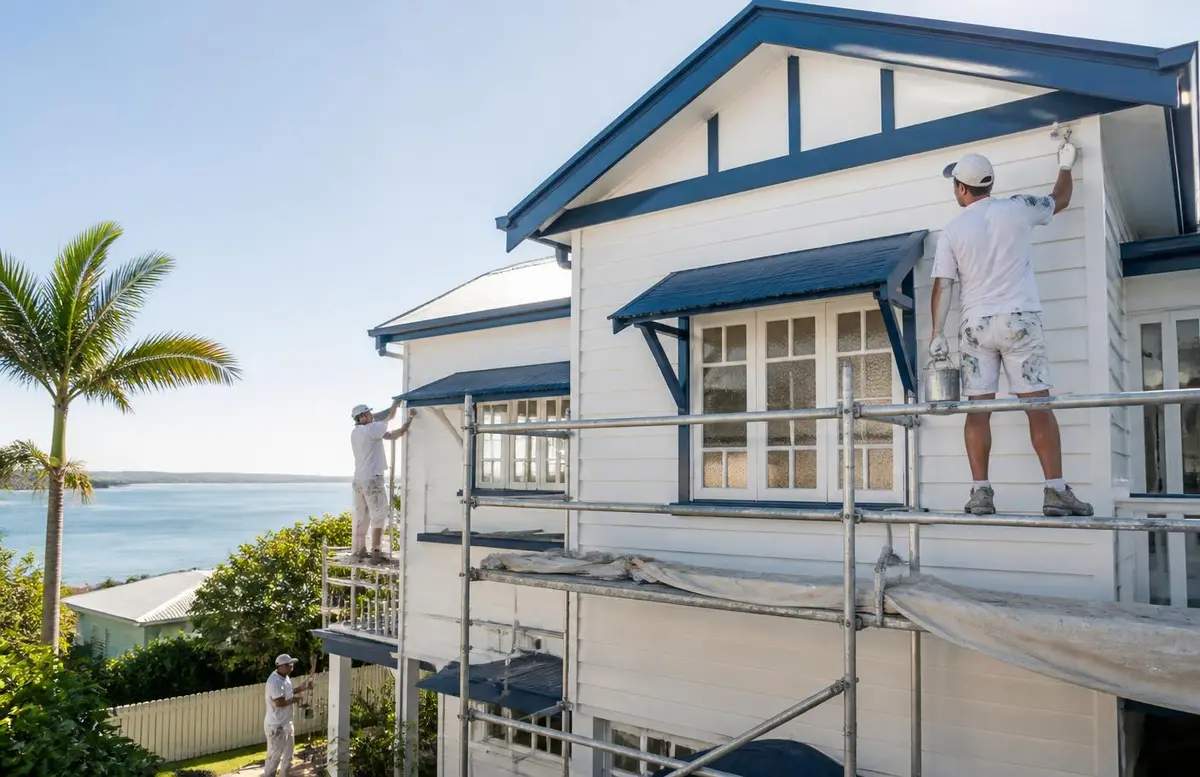
Choosing the right exterior paint system in Hervey Bay is about far more than picking a colour off a chart. Salt-laden air and intense UV exposure place real demands on coatings here, and the right combination of substrate preparation, primer, paint technology and sheen level makes a measurable difference to how long a repaint lasts. Here is what actually matters when selecting exterior paint for a coastal Fraser Coast property.
How Salt and UV Degrade Coatings
Airborne salt is hygroscopic, meaning it draws in and holds moisture against the surface it settles on. When this happens repeatedly on a painted wall, it keeps the substrate damper for longer after rain or humidity, which accelerates coating breakdown, promotes mould growth in shaded areas, and speeds up corrosion on any exposed metal fixings. Combine that with Hervey Bay’s strong year-round UV exposure, which breaks down the resin binders in paint film, and you get a one-two effect: UV embrittles and chalks the surface while salt keeps it chemically active and damp. Homes closer to the Esplanade, Urangan and Point Vernon typically experience this more intensely than more sheltered inland suburbs like Nikenbah or Eli Waters.
Substrate-Specific Coating Systems
Timber
Timber weatherboards and fascia need a system that allows for natural movement without cracking. This generally means a flexible, breathable acrylic system over a properly sealed and primed surface, with particular attention to end grain and joints where moisture ingress starts.
Render and Masonry
Render, brick and masonry surfaces benefit from a system that can bridge fine hairline cracking while still allowing moisture vapour to escape from within the wall. A masonry-specific sealer followed by a flexible acrylic topcoat is the standard approach, particularly on older render that has developed surface crazing.
Fibre Cement
Fibre cement sheeting is dimensionally stable but still needs a properly sealed surface, especially at cut edges and joints, to prevent moisture wicking into the sheet core over time.
Metal, Colorbond and Fixings
Metal surfaces, including gutters, downpipes, balustrades and fixings, are the most vulnerable to salt-accelerated corrosion. These need a rust-inhibiting primer suited to the specific metal type, followed by a topcoat formulated for exterior metal, and require closer monitoring for early rust bleed than other surfaces.
The Role of Primers and Sealers
Primer and sealer choice is arguably more important than topcoat choice in a coastal environment, because this is the layer that determines adhesion and moisture resistance. Bare or previously bare timber needs a penetrating primer that seals the grain, rusted metal needs a converting or inhibiting primer that stabilises existing corrosion before topcoating, and chalky old paint surfaces need a binding primer that locks down the residue so the new topcoat has something sound to grip.
Applying topcoat directly over bare timber, rusted metal or chalky old paint to save time or product cost is one of the most common causes of early coating failure in coastal conditions. The topcoat may look fine initially but will lift, blister or peel well ahead of its expected life.
Acrylic Technology and What It Means for You
Most modern exterior topcoats are acrylic-based, but there is real variation in quality within that category. Higher-grade acrylics use more resin and better UV-stable pigments, giving improved flexibility, better adhesion, and slower colour fade. Coastal-rated or marine-grade acrylic ranges are specifically formulated with additional resistance to salt exposure and are generally worth the extra investment on homes within a few streets of the water, even though we won’t put a figure on that difference here — your painter can talk you through the specific product ranges suited to your property.
Choosing Sheen Levels in Coastal Light
Sheen level affects both appearance and durability. In strong coastal light, gloss and semi-gloss finishes reflect more UV and tend to hold their colour and cleanability better on trims, doors and fascia, but can also highlight surface imperfections on larger wall areas. Low-sheen and matte finishes are more forgiving on broad wall surfaces and are the common choice for main walls, while satin or semi-gloss suits window frames, doors and other high-touch or high-exposure trim elements.
- Low sheen / matte: common for main wall surfaces, forgiving of minor surface imperfections
- Satin: a middle ground often used on weatherboards and some trims
- Semi-gloss / gloss: suited to doors, window frames and fascia where durability and cleanability matter more
Colour Fade Resistance
Darker colours and certain pigment bases fade more visibly under intense UV than lighter, UV-stable tinted colours, because dark pigments absorb more heat and energy. If you have your heart set on a bold, dark exterior colour, ask your painter about UV-stable pigment technology and higher-grade product ranges designed to hold colour better in strong sun, since standard tinting bases in dark tones can fade noticeably faster on north and west-facing walls.
Metal Fixings and Corrosion Control
Nails, screws, hinges, downpipe brackets and other fixings are often the first visible sign of coastal wear, showing rust bleed through the topcoat well before the surrounding paint fails. Where possible, stainless steel or coated fixings reduce this risk, and any existing rust-affected fixings should be treated with a rust converter or inhibiting primer before repainting rather than simply painted over.
Realistic Repaint Intervals: Near the Water vs Inland
There is no single repaint interval that applies to every Hervey Bay home, because exposure varies so much by location and aspect. As a general guide for planning purposes, homes directly exposed to sea breeze along the Esplanade, Urangan and Scarness tend to show coating wear sooner than equivalent homes set back further inland in areas like Nikenbah, Urraween or Kawungan. North and west-facing walls anywhere in the region will generally show fade and chalking before south and east-facing walls on the same house.
Two walls on the very same house can wear at noticeably different rates. The north and west faces cop the most UV and heat, while the south and east faces are more sheltered — inspect each elevation on its own merits rather than assuming uniform wear across the whole house.
Application Method: Brush, Roller and Spray
The application method affects how a coating performs as much as the product itself. Spray application gives a fine, even film and is efficient over large, uninterrupted wall areas, but generally needs to be back-rolled on textured or porous surfaces such as render to work the paint into the surface properly and achieve full coverage. Roller application builds a slightly thicker, more textured film and is well suited to most wall surfaces. Brush work remains essential for cutting in edges, window frames, fine trim detail and areas too tight for a roller or spray gun, and a painter should be using all three methods as appropriate rather than one technique across the whole house.
Common Mistakes That Undermine an Otherwise Good Paint Job
Even a quality product will underperform if these details are missed. Painting over a surface that hasn’t been properly washed and de-salted leaves contaminants trapped beneath the film. Applying a full coat in direct, harsh midday sun can cause the surface to dry too quickly, affecting adhesion and finish. Recoating before the previous coat has properly cured, working in high humidity ahead of a storm, and thinning paint beyond the manufacturer’s recommendation to make it spread further are all mistakes that shorten the life of an otherwise well-chosen coating system.
- Skipping a proper wash-down to remove salt film before painting
- Painting in direct midday sun or on very hot surfaces, causing the film to dry too fast
- Recoating before the manufacturer’s recommended drying and curing time has passed
- Working ahead of an approaching storm front, risking rain damage to an uncured film
- Over-thinning paint to stretch coverage, reducing film thickness and durability
- Ignoring manufacturer application temperature and humidity guidelines
Best Seasons for Exterior Painting on the Fraser Coast
Timing an exterior repaint around Hervey Bay’s climate improves the result. The cooler, drier months outside the November-to-March storm season tend to offer more consistent conditions for proper drying and curing between coats, with lower humidity and a reduced risk of rain interrupting a job partway through. Painting can still be done through the wetter months, but expect more schedule flexibility to be built in, and avoid pressure to rush coats on ahead of forecast rain, since a coating that hasn’t properly cured before getting wet is far more likely to fail early.
If you have some flexibility on when your exterior repaint happens, ask your painter which window in the coming months suits the drying and curing needs of the specific product system proposed for your home. Call now on +61 7 4428 2846 to discuss scheduling around your preferred timeframe.
Reading a Quote for Product and System Detail
When comparing quotes that reference exterior paint systems, look past the total price and check that each one names the specific primer, sealer and topcoat products proposed for each substrate on your home, the number of coats for each, and the sheen level for each area. A quote that simply says “quality exterior paint” without naming a specific range gives you no way to judge whether it’s suited to your home’s exposure, while a quote that spells out the system substrate by substrate lets you compare like with like.
Getting the System Right From the Start
The best outcome for coastal Hervey Bay properties comes from matching the substrate, primer, topcoat grade and sheen level to the specific exposure conditions of each elevation, rather than applying a one-size-fits-all specification across the whole house. A painter who talks you through these choices, rather than just naming a colour and a brand, is giving you the information you need to make a genuinely informed decision.
Talk to Us About the Right System for Your Home
We can assess your home’s specific exposure, substrate and existing coating condition and recommend a paint system suited to your situation. Call now on +61 7 4428 2846 or email quotes@housepaintersherveybay.com.au, Monday to Friday 7am–5pm or Saturday 8am–12pm.
Questions about your own property?
Call Now — +61 7 4428 2846For a local assessment, explore our house painting service in Hervey Bay or ask about work in Dundowran.
Request an on-site painting assessment