
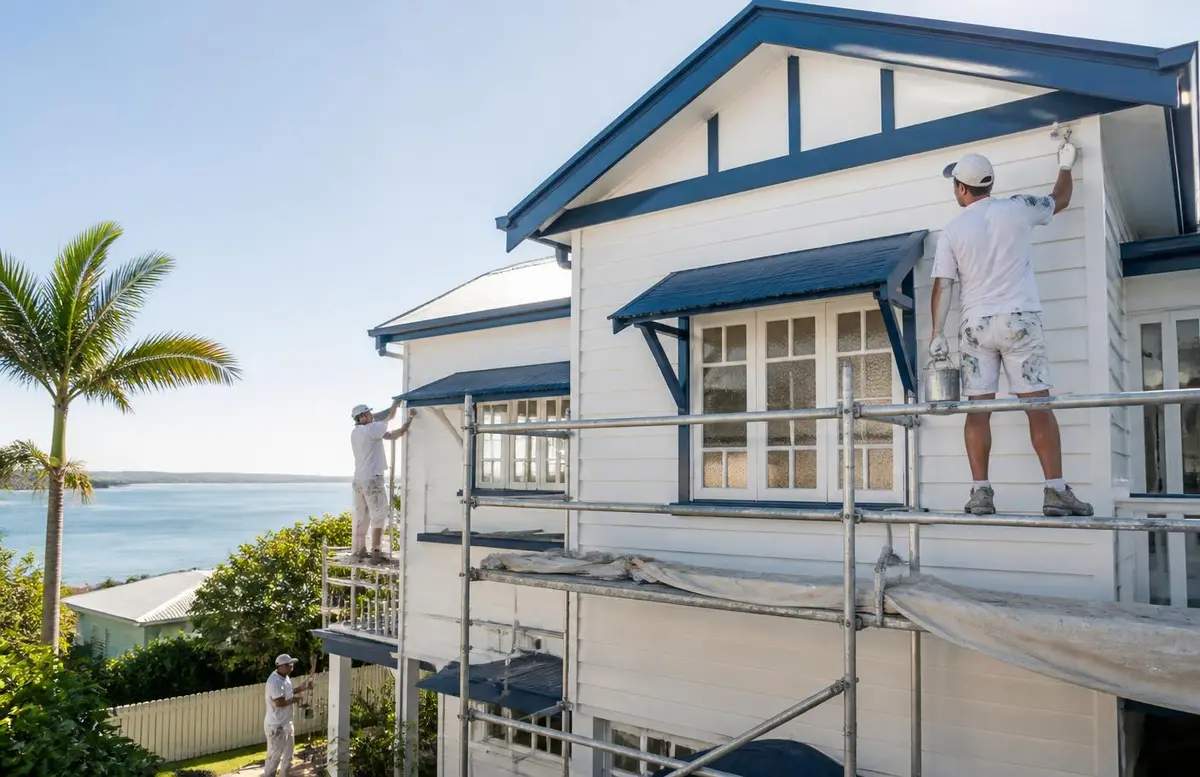
A little preparation before your painters arrive makes the whole job run more smoothly, protects your belongings, and helps avoid delays. Whether you are having the interior, exterior, or both done on your Hervey Bay home, here is a practical, room-by-room and area-by-area guide to getting ready, along with a clear picture of what your painters will handle themselves.
Interior Preparation, Room by Room
Living Areas and Bedrooms
Clear small furniture, lamps, wall art and decorative items from the rooms being painted, and move larger furniture to the centre of the room away from walls, or into a room that isn’t being painted if possible. Take down curtains, blinds and curtain rods where practical, and remove wall-mounted items such as shelves, mirrors and picture hooks.
Kitchens and Bathrooms
Clear benchtops of small appliances and personal items, and empty any cabinets that sit directly under areas being painted. In bathrooms, remove toiletries, towels and shower curtains from the immediate work area, and be prepared for the room to be out of use for periods while paint cures.
Hallways and Stairwells
These narrow, high-traffic spaces need extra clearance since painters need room to move ladders and equipment safely. Remove runners, mats and wall-mounted items along the full length of the area being painted.
Furniture and Belongings
- Move or cover furniture that cannot be relocated out of the room
- Remove wall art, mirrors and shelving from walls being painted
- Take down curtains and blinds, or confirm with your painter whether they will be covered in place
- Roll up or remove rugs from the work area
- Disconnect and move small electronics away from spray or roller work zones
Valuables and Fragile Items
Store jewellery, important documents, electronics and anything fragile or sentimental somewhere secure and out of the work area entirely, rather than simply covering them in place. This removes any risk of accidental damage and gives you peace of mind while tradespeople are moving through your home over multiple days.
If you are storing valuable or fragile items away during the job, a quick photo of their condition beforehand is a simple, sensible precaution for your own records.
Pets and Children
Paint fumes, open doors, ladders and tools underfoot are not a good mix with curious pets or young children. Arrange for pets to be kept in a separate part of the house, in a yard away from the work area, or with family or a pet minder for particularly disruptive days such as spraying or heavy exterior prep. Let children know which areas are off-limits, and keep an eye on outdoor play spaces if exterior work is underway, since ladders, drop sheets and equipment will be set up around the home.
Power and Water Access
Painters typically need access to an external power point for equipment such as sanders and sprayers, and a garden tap for washing down surfaces before painting. Check that your outdoor power points are working and let your painter know in advance if access to these is limited, so alternative arrangements can be discussed before the job starts.
Exterior Access
For exterior work, painters need clear, safe access all the way around the house, including narrow side passages that are often used for storage. Clear these access paths of bikes, bins, garden equipment and stored items in the days before work begins.
- Clear side passages and gateways of stored items and rubbish bins
- Trim back overgrown shrubs, hedges or tree branches touching or close to walls
- Move garden hoses, pots and outdoor decor away from walls being painted
- Ensure gates can be opened fully for equipment access
- Check that any pergolas, awnings or attached structures are clear of stored items
Gardens and Landscaping
Garden beds hard up against walls can make prep and painting difficult and increase the risk of overspray or drips landing on plants. Consider whether any garden beds can be temporarily covered, and discuss with your painter which plants they will protect with drop sheets versus which you might prefer to relocate or trim back yourself beforehand, particularly delicate or valuable plants.
Vehicles, Driveways and Parking
Move vehicles out of the driveway and garage if either area is needed for access, equipment storage or as a staging area for ladders and materials. If street parking is limited in your area, such as tighter streets around Torquay or Scarness, let your painter know so parking arrangements for their vehicle and trailer can be sorted in advance.
Pools and Water Features
Pools near the work area should be covered where practical to prevent dust, sanding residue or paint drips from entering the water, and pool equipment or furniture close to walls should be moved back to give clear working space. Let your painter know the pool is there so they can plan appropriate protection.
Letting Neighbours Know
A quick heads-up to neighbours, particularly if scaffolding, ladders or equipment will be set up close to a shared boundary or fence line, is a simple courtesy that avoids surprises and helps if any temporary access to their side of a boundary fence is needed for full coverage.
Weather Considerations
Hervey Bay’s storm season from November to March brings a higher chance of rain delays for exterior work. Keep an eye on the forecast alongside your painter, and understand that exterior scheduling may shift around wet weather to protect the quality of the finish — painting over damp surfaces or in high humidity can compromise adhesion and drying.
Pushing ahead with exterior painting in wet or highly humid conditions to keep to a fixed date often leads to a poorer, shorter-lived finish. A short weather delay is a much better outcome than a rushed job in the wrong conditions.
A Step-by-Step Timeline in the Week Before Painting
Spreading preparation out over the week before painters arrive, rather than rushing it all the night before, makes the process far less stressful. A staged approach also gives you time to notice anything you might otherwise miss, such as a loose gutter bracket or an overgrown shrub touching a wall.
- Five to seven days out: confirm scope and start dates, arrange pet minding if needed, check outdoor power and water access
- Three to four days out: clear side passages and access paths, trim back shrubs and branches near walls, move vehicles if driveway access is required
- One to two days out: remove wall-mounted items, move or cover furniture, take down curtains and blinds where agreed
- The night before: do a final walk-through of rooms and exterior areas being painted, store away valuables and fragile items
- On the day: be available briefly to confirm colours, discuss access, and introduce pets or household routines that may affect the crew
Common Mistakes That Slow a Painting Job Down
A few recurring oversights account for most of the delays homeowners inadvertently cause. Leaving furniture in place assuming it will simply be “worked around,” forgetting to mention a pool or a fragile garden bed until the crew arrives, and not confirming who is responsible for moving heavy or awkward items are common examples. On exterior jobs, overgrown gardens hard against walls and cluttered side passages are the most frequent access issues that cost time on site.
- Assuming painters will move heavy furniture without confirming this beforehand
- Not mentioning a pool, pergola or delicate garden feature until the crew has already arrived
- Leaving side passages and gateways blocked with bins, bikes or garden equipment
- Forgetting to disconnect or move alarm sensors, cameras or smart-home devices near work areas
- Not confirming access arrangements for gated properties or secured complexes in advance
Interior vs Exterior Jobs: Different Preparation Priorities
Interior preparation is mostly about clearing, protecting and creating safe working room inside your home, while exterior preparation is largely about access, garden management and weather planning. If your project covers both, prioritise interior clearing for the rooms scheduled first, and treat exterior access as an ongoing task throughout the job rather than a one-off task completed before the crew arrives, since gardens can grow and items can accumulate again in side passages over a multi-week project.
If your project covers both interior and exterior painting, ask your painter for the sequence of rooms and elevations so you can prepare each area just ahead of when it’s needed, rather than trying to prepare the entire home all at once.
Questions to Confirm Before the First Day
- Which rooms or elevations are being painted first, and in what order?
- Will curtains, blinds and hardware be removed by the crew or by us beforehand?
- Is our furniture expected to be fully cleared, or moved and covered in place?
- What access arrangements are needed for gates, side passages and shared driveways?
- How will pets and children be kept safely away from ladders, tools and open paint?
- Who do we contact directly if plans change on our end during the job?
What Painters Handle vs What You Handle
Generally, painters will handle masking, drop sheeting, surface protection immediately around the work area, and all of the actual prep and painting work itself. Homeowners are typically responsible for clearing personal items, furniture, valuables, pets, vehicles and general access in advance. If you are ever unsure who is responsible for a specific item or area, ask before the job starts — a quick conversation avoids confusion on the day.
- Painters typically handle: masking, drop sheets, surface protection at the work zone, all prep and painting
- Homeowners typically handle: clearing personal items, furniture, valuables, pets, vehicles, access paths
- Shared responsibility: garden protection, pool covering and neighbour communication — confirm details in advance
Ready to Book Your Painting Project?
Once you know what to expect, preparing for painters becomes a straightforward checklist rather than a source of stress. If you have questions about preparing your specific home, call now on +61 7 4428 2846 or email quotes@housepaintersherveybay.com.au, Monday to Friday 7am–5pm or Saturday 8am–12pm.
Questions about your own property?
Call Now — +61 7 4428 2846For a local assessment, explore our house painting service in Hervey Bay or ask about work in Dundowran.
Request an on-site painting assessment